Home/Services/Commercial ADU
Service 06 — Commercial & Non-Residential ADU

Two Paths for Property Owners and Investors

Convert unused commercial space into legal residential units, or build a non-residential accessory structure — a detached office, studio, workshop, or guest quarters. We handle both under a single contract.

400–1,500Square Feet
6–12Months Build
90–150Days Permit
$210k–$520kConstruction Cost
400 – 1,500 sq ft Typical Range
Change-of-Use Permit Required
Mixed-Use & Commercial Zoning Eligible
$210k – $520k Construction Cost
Investor Focus Portfolio Scale

Two Very Different Projects, One Team

"Commercial ADU" is an umbrella term we use for two distinct categories of work. The first is a commercial-to-residential conversion — turning unused retail, office, or storage space into legal dwelling units under California's recent adaptive-reuse laws. The second is a non-residential accessory structure — a permitted detached building used as an office, studio, workshop, or guest quarters rather than a full dwelling.

The two paths share almost nothing in their permitting route, but they both require the same combination of zoning analysis, architectural design, structural engineering, and licensed construction that we deliver in-house. We work with commercial property owners, mixed-use investors, and homeowners who need a non-residential accessory structure in the backyard.

We do not do pure commercial tenant improvements (TIs) for restaurants, retail, or offices. We build housing and accessory structures.

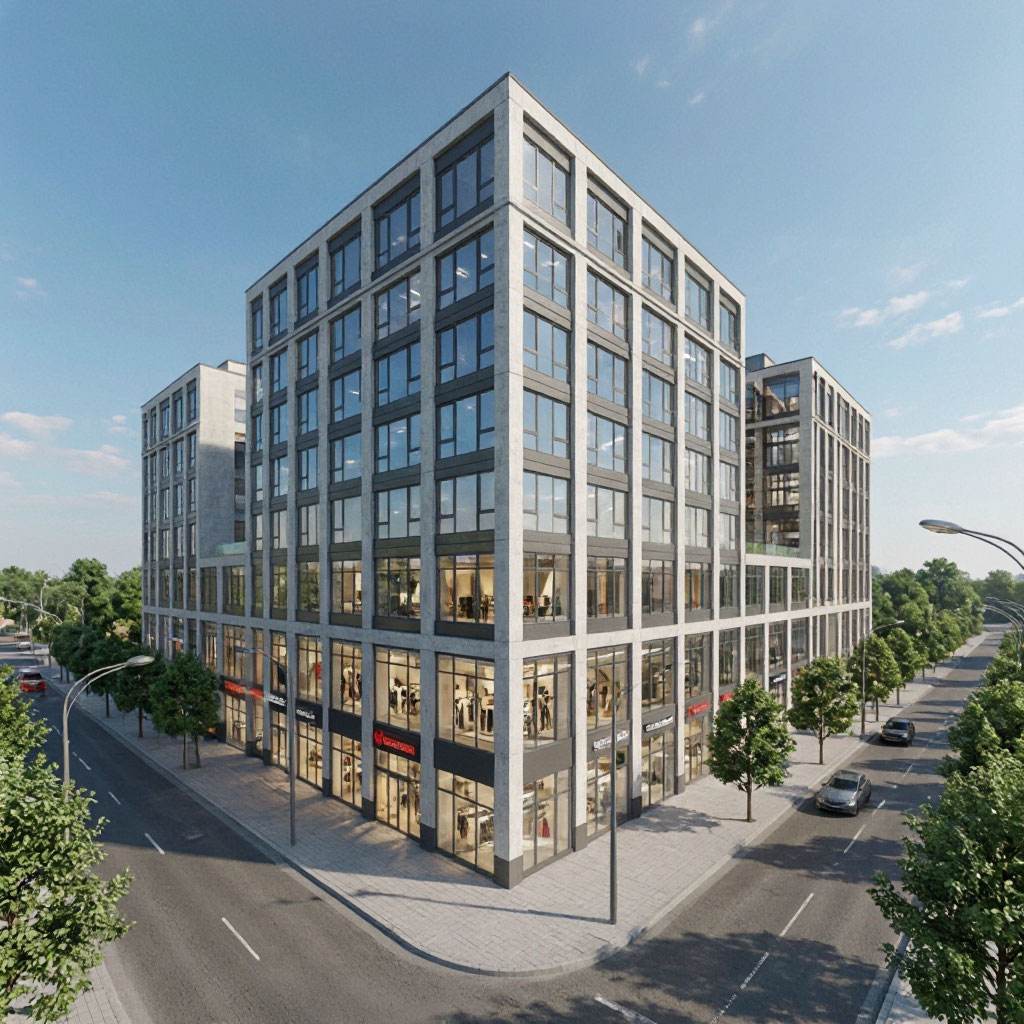
Mixed-use commercial building

Which Type of Project Do You Need?

The two categories have different regulatory frameworks, different permitting timelines, and different cost structures. Here is how each works.

Path One

Commercial-to-Residential Conversion

Converting underused commercial space into legal dwelling units. This includes converting back-office space, retail frontage, storage rooms, and whole obsolete commercial buildings into housing.

  • Mixed-use buildings adding residential units
  • Office-to-residential adaptive reuse
  • Retail back-of-house to dwelling unit
  • Change-of-use permits and zone variances
  • New utility service and parking mitigation
  • AB 2011 and SB 6 eligible projects
Request a Commercial Conversion Consultation
Path Two

Non-Residential Accessory Structure

A permitted accessory building on a residential lot that is used as an office, studio, workshop, or guest quarters — not as a full legal dwelling unit. No kitchen required, no permanent sleeping facility.

  • Backyard home office or studio
  • Detached workshop, gym, or hobby space
  • Guest quarters without a full kitchen
  • No impact on lot's ADU unit count
  • Faster and lower-cost than a full ADU
  • Permitted as a non-habitable accessory building
Request a Non-Residential Structure Consultation

Built for Owners and Investors

Commercial and non-residential ADU work is generally larger in scope than a single-family ADU. These are the clients we work with most often.

Mixed-Use Property Owners

Owners of buildings with ground-floor retail and underused upper or rear space. Adding residential units increases revenue and diversifies tenancy risk.

Real Estate Investors

Investors acquiring obsolete commercial assets for adaptive reuse. We work with you on underwriting, phasing, and holding-period strategy.

Small Business Owners

Business owners who own their building and want to add housing above or behind their operation — live-work configurations, staff housing, or rentals.

Homeowners Needing Non-Residential Space

Homeowners who need a detached office, studio, workshop, or guest quarters — but not a full legal dwelling unit with a kitchen and permanent sleeping facility.

Developer Partners

Small and mid-size developers who need a licensed general contractor for adaptive reuse and small multifamily projects from 2 to 20 units.

Nonprofit Housing Organizations

Nonprofits creating transitional or supportive housing in converted commercial space. We can work within public funding timelines and reporting requirements.

Why Commercial Conversions Are Now Possible

Three recent California laws have made it dramatically easier to convert commercial space into housing. Understanding them changes what is possible on your property.

AB 2011

By-Right Housing on Commercial Corridors

Allows by-right residential development on commercially zoned land along major corridors, bypassing discretionary review. Includes affordable housing set-asides but dramatically shortens approval timelines.

SB 6

Residential Use on Commercial Land

Permits residential use on land currently zoned for office, retail, or parking without a full zone change. Local agencies cannot reject the residential use solely because the land is commercially zoned.

AB 2097

Parking Minimums Eliminated

Removes minimum parking requirements for developments within half a mile of major transit stops. Commercial conversions near transit no longer need to build or replace parking.

AB 68 + AB 881

ADU Rights Expanded

Strengthened the right to add ADUs on residential properties, including non-residential accessory structures that do not count against the lot's dwelling-unit cap.

Local Ordinances

City-Level Adaptive Reuse Programs

Los Angeles, San Francisco, San Diego, Oakland, and others have added local expedited programs for commercial conversions. Many offer fee waivers or streamlined review.

Our Role

We Read the Rules So You Don't Have To

Every project begins with a zoning and entitlement analysis specific to your address. We tell you what your jurisdiction allows today — not what was possible five years ago.

Commercial ADU Cost by Type

Real 2026 California costs from recent ADU Construction projects. Permit, impact, and utility fees are separate and paid at jurisdiction rates.

Project Type Size Range Construction Cost Timeline Best For
Small Mixed-Use Unit 400 – 600 sq ft $210,000 – $290,000 6 – 8 months Retail back-office conversion
Standard Commercial Conversion 600 – 900 sq ft $280,000 – $410,000 8 – 10 months Office-to-residential
Large Commercial Conversion 900 – 1,500 sq ft $390,000 – $520,000 10 – 12 months Full-floor adaptive reuse
Non-Residential Accessory 200 – 500 sq ft $120,000 – $230,000 4 – 7 months Detached office, studio, workshop
Guest Quarters (No Kitchen) 300 – 600 sq ft $150,000 – $280,000 5 – 8 months Detached guest house, no full kitchen

Commercial Conversions Are Not DIY Permits

Change-of-use permits, zoning entitlements, and in some cases a public hearing are required for commercial-to-residential conversions. Doing this work without proper permitting, or with a contractor who has never handled an entitlement, is the single most common way investors lose money on these projects. Every conversion we build is fully entitled, fully permitted, and inspected at every stage.

What It Looks Like When It Works

Completed commercial conversion

"We owned a 1960s office building in Los Angeles with ground-floor retail and two floors of dead office space nobody wanted to lease. ADU Construction ran a feasibility study, then took us through a full change-of-use and built out six residential units over eleven months. The building is now fully leased, and our net operating income has more than doubled. They knew the AB 2011 and SB 6 rules better than our own attorney."

Marcus T. Mixed-Use Conversion — Los Angeles, CA

Commercial ADU FAQ

What is the difference between a commercial ADU and a non-residential ADU?

A commercial ADU converts commercial or mixed-use space into a legal residential dwelling unit with a kitchen, bathroom, and permanent sleeping area. A non-residential ADU is an accessory structure — usually on a residential lot — that is permitted as a legal building but used for something other than a full dwelling: an office, studio, workshop, gym, or guest quarters without a full kitchen. The two categories share a name but sit in very different regulatory frameworks, which is why we treat them as two distinct service paths.

Can I convert part of my existing business into housing?

In many California jurisdictions, yes. Under SB 6, residential use is permitted on commercially zoned land without a full zone change. AB 2011 allows by-right residential on commercial corridors, though it comes with affordability requirements. Your specific building, lot, and jurisdiction determine what is possible. We run a zoning and entitlement analysis for every address before quoting a project.

Do I need a public hearing to convert commercial space to residential?

It depends on the jurisdiction and the project. Some conversions qualify for ministerial (by-right) approval under AB 2011 or a local adaptive-reuse program. Others require a public hearing for a conditional use permit or zone variance. In our experience, roughly 60% of the conversions we take on avoid a public hearing entirely. We tell you upfront whether your specific project will need one, and we prepare the hearing package if it does.

How many units can I build in a commercial building?

It depends on the building's square footage, the zoning designation, and the jurisdiction's density rules. Under AB 2011, density is governed by the underlying zoning and by affordability requirements. As a practical rule of thumb, a 2,000 sq ft conversion typically yields two to four studio or one-bedroom units. We will model unit count options during feasibility so you can see the trade-off between unit size and total unit count.

Does a non-residential ADU count against my property's ADU unit cap?

No. A legally permitted non-residential accessory structure is not a dwelling unit and does not count against the maximum number of dwelling units permitted on a residential lot. This means a homeowner can have both a full ADU and a separate non-residential accessory structure — an office, studio, or workshop — on the same property, subject to local lot coverage and setback rules.

Can a non-residential ADU later be converted to a full ADU?

Yes, if it is built to the structural and life-safety standard of a dwelling from the start. We design non-residential accessory structures with future conversion in mind: adequate ceiling height, egress windows in the right positions, and utilities roughed in for a future kitchen and bathroom. This costs slightly more upfront but saves substantial expense if you decide to convert later.

What if my commercial building is in a historic district?

Historic districts add complexity but do not automatically disqualify a conversion. Interior conversions are often permitted with minimal exterior changes, and many historic districts have design-review processes that are manageable if the exterior is preserved. We have worked on projects in historic districts in Los Angeles, San Francisco, and Pasadena. We handle the design-review submission and coordinate with your jurisdiction's preservation staff as part of the project.

Do you work outside of California?

No. We are licensed in California only, and we work exclusively within the state. The regulatory landscape, seismic code, and ADU laws we know well are all California-specific. If you have a project in another state, we can refer you to contractors we trust in a few markets, but we do not build outside California.
Looking for a Residential ADU Instead?

If your project is on a residential lot and you want a full dwelling unit, the other ADU types may be a better fit. Every project starts with a free feasibility assessment.

Talk to a Commercial ADU Specialist

Send us the address, the current use of the building, and roughly what you are trying to accomplish. We will respond with a preliminary entitlement analysis and a realistic cost range — no commitment required.

(415) 867-5309
450 Mission Street, San Francisco, CA 94105
Mon–Fri: 8:00 AM – 6:00 PM PT

By submitting, you agree to our Privacy Policy. We respond within one business day.